For today’s industrial and commercial operations, managing wastewater isn’t easy to ignore, it’s an essential part of staying compliant and protecting the environment. When wastewater isn’t handled properly, it can pose serious risks to waterways, communities, and your operation’s regulatory standing. That’s why more businesses are turning to Crystal Clean for dependable, sustainable industrial wastewater management solutions.
With over 100 million gallons of wastewater pre-treated annually, prior to discharge to local Publicly Owned Treatment Works, Crystal Clean helps customers across North America handle their non-hazardous wastewater with confidence. Our full-service approach is built on over 25 years of regulatory expertise, operational efficiency, and environmental responsibility.
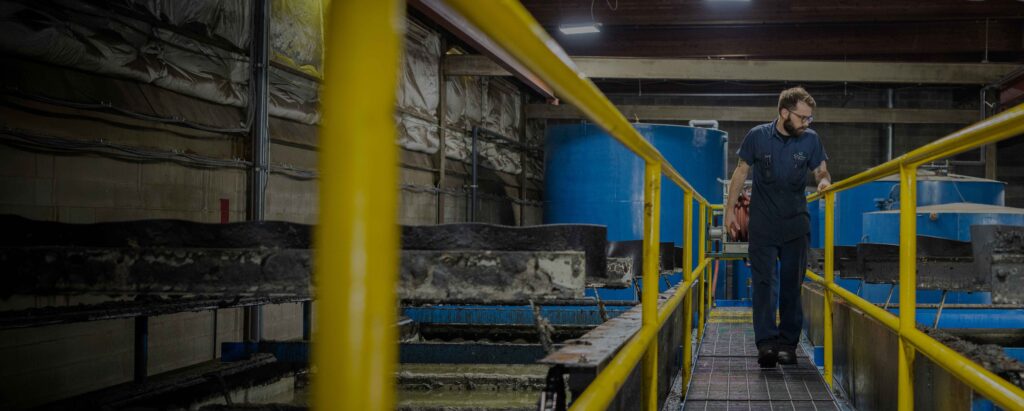
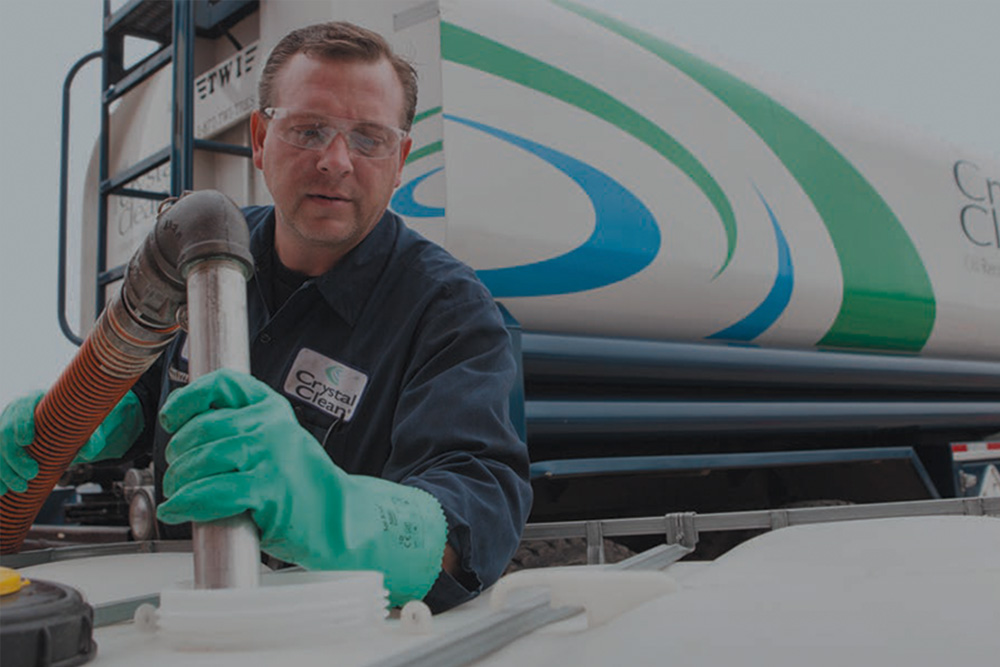
Crystal Clean operates a network of advanced wastewater pre-treatment facilities, and solidification facilities for non-treatable solids and sludges, throughout North America. Each wastewater treatment plant is designed to manage a wide variety of non-hazardous liquid and solid waste streams from industrial and commercial operations.
Crystal Clean’s range of customers come from factories and repair shops to chemical plants and commercial buildings. Our facilities use specialized wastewater systems and solidification facilities to treat the waste these operations generate. Each pre-treatment system follows a proven treatment process that removes oils, solids, and other contaminants, ensuring that only clean water is released. If the facilitiy is unable to treat the waste through pre-treatment, we can also alternatively manage the wastes through solidification.
How Our Wastewater Systems Work
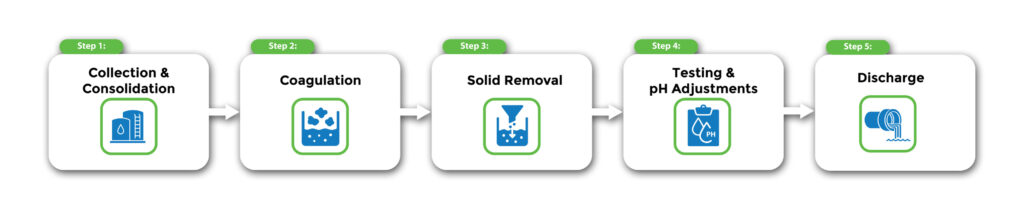
Our treatment process follows a structured, five-step method that ensures every gallon is handled with care and precision.
What Happens to the Waste?
Crystal Clean’s industrial wastewater management program includes full accountability for all byproducts:
Recovered oils are routed to our in-house used oil re-refinery, where they are transformed into high-quality base oils.
Solid materials are stabilized and sent to secure, permitted landfills.
Cleaned water is discharged in compliance with EPA, state, and POTW standards.
This integrated model supports sustainability and contributes to a circular economy by recycling valuable materials and reducing waste volume.
Certified Treatment Capabilities
Our wastewater pre-treatment plants are permitted to process a broad range of non-hazardous wastes, including:
EPA Subcategory A – Metals
EPA Subcategory B – Used Oils
EPA Subcategory C – Organics
EPA Subcategory D – Mixed Waste
Oily Water Treatment
Petroleum Phase Separation and Recycling
Non-RCRA Liquids & Semi-Solids
Non-Hazardous Solidification
Whether you need to treat oily wastewater, organic contaminants, metals, or suspended solids, Crystal Clean has the capacity and certifications to do it right.
Tailored Programs for Compliance and Efficiency
Our team works directly with each customer to design a tailored wastewater management plan that includes:
On-site waste stream analysis
Scheduled pickups and transportation
Full regulatory documentation
Ongoing service support and reporting
At Crystal Clean, it is our mission to help you stay compliant, reduce costs, and meet your sustainability goals.
Let’s Work Together to Make the Business World Run Cleaner
Crystal Clean is proud to be a trusted partner in industrial wastewater management, supporting businesses that take their environmental responsibilities seriously. With a reliable network of wastewater treatment plants, expert technicians, and customer-first service, we make it easy to do the right thing for your business and the Earth’s resources.
Industrial facilities rely on heat transfer fluids (HTFs) to manage temperature, protect equipment, and maintain operational continuity across a wide range of environments. Whether supporting HVAC loops, stationary engines, process equipment, or seasonal shutdowns, using the proper fluid is essential for system longevity and performance.
Unlike automotive coolant, industrial HTFs must accommodate diverse operating temperatures, metallurgy, system pressures, and environmental considerations. Additive packages, glycol type, inhibitor chemistries, and OEM requirements all influence which product best fits the application. Selecting the appropriate fluid helps prevent corrosion, scaling, fouling, freeze damage, and costly equipment failures.
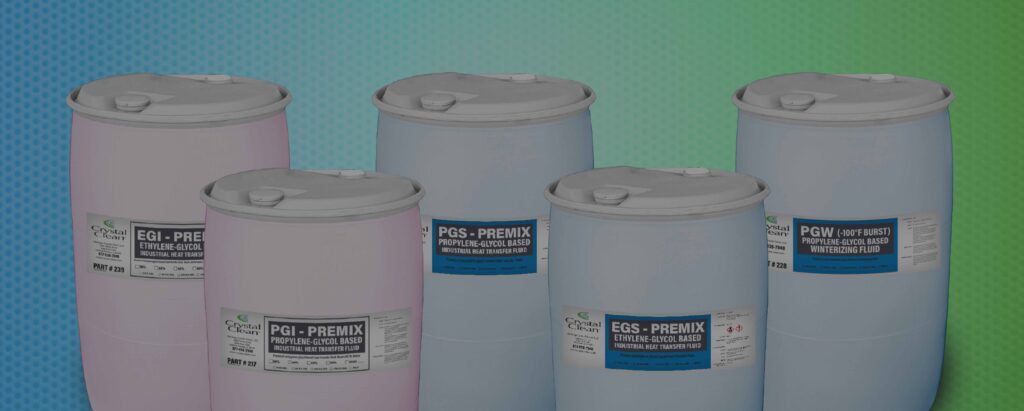
Below is an overview of Crystal Clean’s industrial heat transfer fluid portfolio and where each product delivers its best performance.
Ethylene Glycol–Based Industrial HTF (EGI-HTF)
Best for: Commercial and industrial systems requiring a high-phosphate, multi-metal corrosion-protected ethylene glycol fluid.
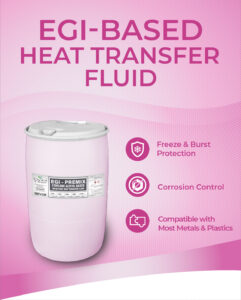
Key Benefits: EGI-HTF uses a robust high-phosphate inhibitor system that provides excellent protection for copper, brass, solder, steel, cast iron, and aluminum. The formulation prevents scaling, fouling, and pH degradation while delivering reliable thermal performance across an operating range of –60°F to +300°F. It is functionally equivalent to DOWTHERM™ and JEFFCOOL® E100, allowing seamless top-offs or changeovers, and is available in both concentrate and ready-to-use premix options for easy implementation.
Where It Fits: Ideal for a wide range of industrial temperature-control applications including HVAC systems, solar heating, process loops, thermal storage, ice rinks, sidewalk melting, floor heating, and cold-room dehumidification.
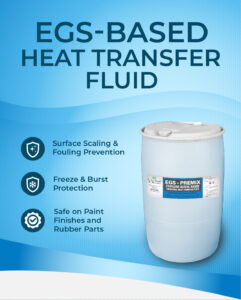
Ethylene Glycol–Based Stationary Engine HTF (EGS)
Best for: Heavy-duty stationary engines requiring nitrited protection and OEM-aligned performance.
Key Benefits: EGS features an advanced inhibitor system with a minimum of 2400 ppm nitrite in concentrate, delivering superior protection against cavitation, hot-surface scaling, and corrosion in wet-sleeve liners, water pumps, and mixed-metal systems. The silicate-free, phosphate-free formulation minimizes deposits while meeting ASTM D6210, D4985, D3306, and D1384 performance standards. It provides year-round defense against freeze-ups, boil-overs, and coolant breakdown, making it a reliable solution for demanding stationary engine environments.
Where It Fits: Designed for oil & gas, natural gas processing, compressor engines, power generation, and other industrial stationary engines. Suitable for use in systems calling for Cummins CES14603, Caterpillar DEAC, John Deere H24, Waukesha 4-1974D, EMD 1748E, and related OEM specifications.
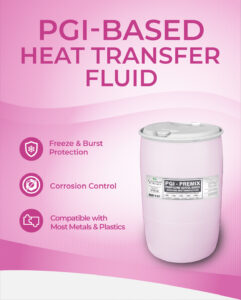
Propylene Glycol–Based Industrial HTF (PGI-HTF)
Best for: Industrial systems needing lower toxicity, high-phosphate inhibitors, and full corrosion protection across wide temperature ranges.
Key Benefits: PGI-HTF combines a propylene glycol base with a high-phosphate, multi-component inhibitor package to deliver excellent corrosion resistance and thermal stability. The reduced toxicity allows for safer handling and disposal, while the formulation protects copper, brass, solder, steel, cast iron, and aluminum from rust, scaling, and acidic attack. With an operating range from –60°F to +300°F and compatibility with DOWFROST HD™ and JEFFCOOL® P150, it provides broad system compatibility and long-term reliability.
Where It Fits: A strong choice for HVAC systems, solar heating, floor heating, thermal storage, ice rinks, sidewalk snow-melting systems, process cooling/heating, and cold-room dehumidification.
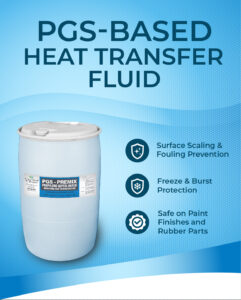
Best for: Stationary engines requiring heavy-duty inhibitors and lower-toxicity glycol bases.
Key Benefits: PGS delivers the same heavy-duty performance expected in stationary engine environments while leveraging a propylene glycol base for reduced toxicity. Its nitrited, silicate-free, and phosphate-free formulation protects wet-sleeve liners from cavitation, shields all system metals from corrosion, prevents hot-surface scaling, and disperses minor oil leakage. Meeting ASTM D6210, D4985, D3306, and D1384 requirements, it maintains dependable freeze, boil-over, and corrosion protection year-round.
Where It Fits: Recommended for oil & gas compression, energy production, natural gas processing, and industrial engine applications requiring OEM standards such as Cummins, Caterpillar, John Deere, Waukesha, and EMD.
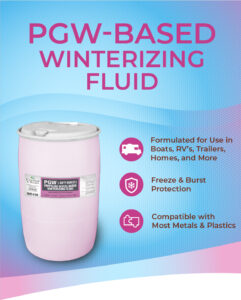
Propylene Glycol–Based Winterizing Fluid (PGW)
Best for: Seasonal shutdowns requiring burst protection for potable water systems, HVAC loops, and recreational equipment.
Key Benefits: PGW is a ready-to-use winterizing solution available in –50°F and –100°F burst protection formulas, using a phosphate-based corrosion inhibitor to protect metals such as copper and brass. Dyed pink or blue for easy system verification, it is safe for most plastics and can be mixed with comparable RV and marine winterizing fluids without adverse effects. Its formulation prevents freeze expansion damage in systems exposed to severe temperatures, providing reliable seasonal protection.
Where It Fits: Ideal for winterizing boats, RVs, trailers, vacation homes, swimming pool filtration systems, and commercial or residential water loops requiring seasonal shutdown.
Matching Products to Industrial Performance and Protection
Choosing the right heat transfer fluid is more than meeting performance specifications—it protects critical equipment, optimizes operational efficiency, prevents unplanned downtime, and simplifies inventory management. Crystal Clean offers an industrial-grade portfolio engineered for superior thermal performance, corrosion resistance, and long-term system reliability.
With high-quality fluids, nationwide supply capability, and closed-loop recycling services for used glycol, Crystal Clean helps industrial operators reduce waste, lower disposal costs, and maintain safe, efficient, and environmentally responsible systems year-round.
Environmental compliance and sustainability aren’t competing priorities. They’re two sides of the same operational system, and the companies getting this right are building competitive advantages that extend far beyond simply checking the compliance box.
Industrial operations face increasing expectations. Regulators require documented compliance, investors demand measurable ESG performance, customers audit supplier environmental practices, and your workforce expects responsible operations. The businesses succeeding aren’t choosing between these priorities, they’re meeting all of them through integrated waste management systems that strengthen reliability, safety, and sustainability.
Crystal Clean partners with industrial operations to build waste management programs that satisfy both compliance requirements and sustainability objectives. Environmental management is structured properly, the same systems that ensure compliance also advance environmental goals and support safer, more efficient operations.
Understanding the EPA Hazardous Waste Disposal Guidelines
The EPA defines hazardous waste based on specific characteristics: ignitability, corrosivity, reactivity, and toxicity. Identifying which wastes meet these criteria determines the required management approach throughout their lifecycle.
Industrial facilities generate spent solvents from parts cleaning, used oils from equipment maintenance, and chemical byproducts from production. Each waste stream requires specific management protocols, but the regulatory framework remains consistent across industries.
Waste Identification and Classification
The EPA’s hazardous waste lists categorize materials based on their source or properties. F-list and K-list wastes are hazardous because of how they’re generated. P-list and U-list wastes are specific chemical formulations. Characteristic wastes become hazardous when they exhibit certain properties through testing or generator knowledge.
Accurate classification determines your regulatory obligations. A metal fabricator generating spent cutting fluids needs different procedures than an automotive shop managing used oil. Both require proper characterization, but the specific requirements vary based on waste types and generation volumes. This is why standardized procedures supported from a reliable service partner matters.
Your generator status—determined by monthly waste volumes—establishes which regulations apply. Very Small Quantity Generators (100 kg or less monthly) have streamlined requirements. Small Quantity Generators (100-1,000 kg monthly) face moderate obligations. Large Quantity Generators (1,000+ kg monthly) must meet comprehensive standards, including 90-day storage limits, detailed emergency procedures, and regular reporting.
Waste management partners like Crystal Clean help facilities maintain generator status compliance with consistent scheduling, documentation support, and proper waste classification.
Storage, Labeling, and Containment
Proper storage prevents incidents and protects employees, facilities, and the environment while maintaining compliance. Containers must be compatible with waste contents, certain solvents degrade plastic, some acids corrode metal. Each container needs clear labeling showing “Hazardous Waste,” the accumulation start date, and contents description.
Accumulation time limits create planning requirements. Large quantity generators have 90 days. Small quantity generators have 180 days (or 270 days if shipping more than 200 miles). Exceeding these limits triggers different regulatory classifications with significantly more requirements.
Secondary containment systems provide backup protection if containers leak. Spill pallets, bermed areas, or containment structures must hold at least 10% of the total stored volume or the largest container’s volume, whichever is greater. This prevents waste from reaching soil or stormwater systems if primary containment fails.
Incompatible wastes require separation. Acids can’t be stored with bases. Oxidizers need isolation from organic materials. Proper segregation prevents reactions that could create safety hazards or compromise waste characterization.
Transportation and Disposal
Transportation requires manifest documentation that creates a paper trail from generation through final disposal. You originate the manifest with generator information, transporter details, designated facility information, and complete waste descriptions, including EPA codes and quantities.
Each party in the transportation chain signs the manifest, transferring custody at every handoff. The disposal facility returns the completed manifest confirming proper receipt. This documentation proves waste reached authorized facilities and was managed according to regulations, becoming a critical piece of tracking your compliance.
Federal law requires manifest retention for three years. Many states require longer periods. Electronic manifest systems streamline this recordkeeping while improving accuracy and retrieval capabilities.
Final disposal methods vary by waste characteristics. Some materials can be recycled or re-refined. Others require incineration or specialized treatment. Modern facilities can neutralize acids, recover valuable components from spent materials, and destroy persistent compounds through advanced treatment technologies.
Recordkeeping and Documentation
Beyond manifests, you must maintain waste characterization records showing classification decisions, inspection logs documenting storage area reviews, and training records proving personnel have received required instruction. Large Quantity Generators submit biennial reports summarizing waste generation and management methods.
These records serve compliance verification during inspections and provide data for sustainability reporting. Systematic documentation processes generate required records as part of normal operations rather than creating separate compliance exercises.
Top Sustainability Practices for Industrial Businesses
Sustainability practices that reduce environmental impact often strengthen compliance posture while improving operational efficiency. The following approaches create measurable benefits across multiple objectives.
1. Waste Minimization
Reducing waste generation eliminates disposal costs, decreases raw material consumption, and may lower your generator status classification. Process optimization often reveals significant opportunities. A metal fabricator modifying cutting patterns might reduce scrap by 15%. A printing operation switching ink formulations could cut spent solvent volumes by 30%.
Inventory management affects waste generation. Chemicals expiring before use become disposal problems. Raw materials degrading in storage must be discarded. Just-in-time inventory practices for materials with limited shelf life reduce waste while improving cash management.
Material substitution can eliminate hazardous waste streams entirely. Switching from solvent-based to aqueous cleaning removes hazardous spent solvents from your waste streams. Using alternative process chemicals may render the generated waste non-hazardous. Each substitution that eliminates hazardous waste removes associated compliance obligations and contributes to stronger sustainability reporting metrics.
2. Recycling and Reuse
Many waste streams traditionally sent to disposal can be recycled or reclaimed. Used oil can be re-refined into base oils that meet virgin product specifications, while producing 77% fewer greenhouse gas emissions than virgin production. Spent solvents can be distilled and reused. Used Antifreeze can be recovered for reuse.
The regulatory framework supports legitimate recycling. Materials genuinely being recycled often qualify for streamlined requirements compared to waste destined for disposal. However, recycling claims must be substantiated. Materials must actually be recovered and reused, not merely declared recyclable while going to landfills.
Closed-loop systems represent the most sophisticated recycling approach. Solvent recovery equipment distills spent solvent on-site and returns recovered material to production. Water treatment systems enable process water reuse. These systems eliminate disposal while reducing raw material purchases.
From a sustainability perspective, recycling demonstrates resource efficiency. From a compliance perspective, reducing hazardous waste generation may lower your generator status and associated regulatory requirements.
3. Energy Recovery Programs
When waste can’t be eliminated or recycled, energy recovery provides environmental benefits beyond landfilling. Certain waste streams with sufficient heating value can fuel industrial processes at facilities specifically permitted for this purpose.
This approach prevents materials from being sent to landfills while reducing fossil fuel consumption. Cement kilns, industrial boilers, and other permitted facilities can utilize appropriate waste streams as alternative fuels. The waste must meet compositional requirements and heating value standards, and receiving facilities must properly manage combustion residues.
Energy recovery isn’t appropriate for all wastes, but for streams with suitable characteristics, it provides measurable environmental benefits while maintaining regulatory compliance.
4. Water Conservation
Industrial water consumption creates both cost and environmental impact. Closed-loop water systems recirculate process water rather than discharging after single use. Treatment components remove contaminants so water meets process specifications for reuse.
This reduces freshwater consumption and the volume of wastewater discharged. Since wastewater management costs often depend on volume, conservation delivers direct economic benefits alongside environmental improvements and may simplify discharge-related compliance obligations.
Process modifications can dramatically reduce water needs. Equipment upgrades may achieve better results with less water. Operational changes might enable water reuse between process steps. Counter-current rinsing systems can reduce rinse water consumption by 90% compared to conventional methods.
From a sustainability reporting perspective, water reduction metrics demonstrate resource efficiency. From a compliance perspective, lower discharge volumes may reduce permitting requirements and monitoring obligations while supporting broader sustainability goals.
5. Sustainable Partnerships
Your waste management partners either support or undermine your sustainability objectives. Selecting partners who prioritize environmental performance helps you achieve goals extending beyond facility boundaries.
Evaluate potential partners on treatment methods and resource recovery capabilities. Do they actively pursue recycling options or default to disposal? Do they operate recovery facilities or only landfills? Can they provide data about the environmental benefits of their approaches?
Partner sustainability practices appear in your Scope 3 emissions calculations. The treatment methods they use directly affect your reported environmental footprint. Partners with lower-impact methods improve your sustainability metrics without requiring operational changes.
Geographic proximity reduces transportation emissions associated with waste management. When choosing between similar providers, closer facilities reduce your carbon footprint from logistics.
How Crystal Clean Supports Sustainable Compliance
Navigating the intersection of compliance and sustainability requires expertise many facilities don’t maintain in-house. Crystal Clean approaches waste management as an integrated system serving both regulatory requirements and environmental objectives.
Our service model addresses the complete waste lifecycle while creating documentation needed for compliance verification and sustainability reporting. The foundation starts with proper waste characterization, compliant storage and labeling, authorized transportation, and permitted treatment or disposal. This is all supported by trained sales and service representatives committed to safety and environmental stewardship.
Beyond baseline compliance, we optimize treatment methods for environmental performance. When waste can be recycled, we direct it to recovery facilities. When re-refining is possible, we process materials into reusable products. When advanced treatment technologies can destroy persistent compounds, we utilize facilities with those capabilities to ensure waste is managed in the most sustainable, compliant manner available.
Our nationwide network with local presence creates consistency across multi-site operations while adapting to state-specific requirements. Your procedures remain uniform, but implementation accounts for regional regulatory differences and local operational needs.
Our customer portal provides waste stream reporting that analyzes your wastes and tracks specific impacts on your carbon footprint. This data supports both compliance documentation and sustainability reporting requirements. Electronic systems track waste from pickup through final disposition, providing the records needed for audits and stakeholder reporting.
Because we operate our own permitted treatment, recovery, and recycling facilities, we provide more options than transportation-only vendors. This means greater flexibility in matching waste streams to optimal management methods, recycling when possible, advanced treatment when necessary, and disposal only when other options aren’t viable.
Our environmental specialists evaluate your facilities for waste minimization opportunities and process improvements. We monitor regulatory changes at state and federal levels, keeping you informed of upcoming changes that may impact your operations. This expertise supplements your internal capabilities without requiring you to maintain specialized knowledge across all environmental regulations and promoted proactive compliance.
Make Compliance Part of Your Sustainability Strategy
Environmental compliance and sustainability represent aligned outcomes from the same operational practices. When you implement waste minimization, you simultaneously reduce disposal costs, lower environmental impact, and potentially decrease regulatory obligations. When you select partners with resource recovery capabilities, you ensure compliance while improving emissions metrics that investors scrutinize.
Building this integrated approach requires treating waste management as strategic infrastructure. Select partners based on capabilities and expertise, not just price. Document practices to satisfy both regulatory agencies and sustainability auditors. View environmental performance as a competitive advantage rather than a cost of doing business.
The businesses succeeding at this integration recognize that operational decisions affect both compliance posture and sustainability performance. They’ve built systems that work consistently, selected partners whose capabilities match their needs, and treated environmental management as a strategic function.
Your waste management program deserves the same strategic attention you give other operational functions. The right approach, implemented consistently across your organization, becomes a strategic asset that protects operations, satisfies stakeholders, and advances environmental objectives while simplifying regulatory compliance.
Stay compliant, sustainable, and ahead of regulations. Partner with Crystal Clean today to build a customized waste management program that aligns with your environmental goals, strengthens operational performance, and supports a cleaner future.
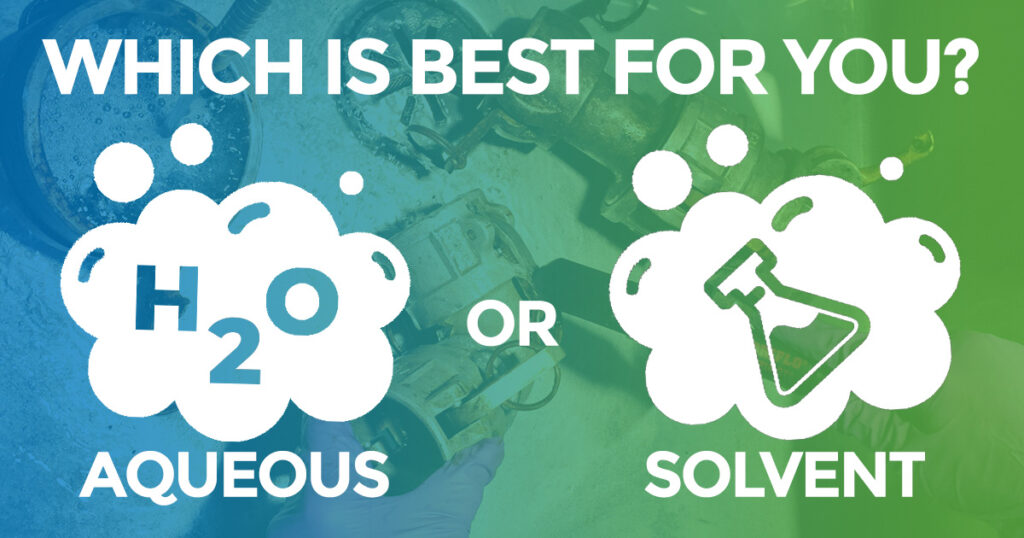
When it comes to parts cleaning, not all chemistries are created equal—and the choice between aqueous and solvent-based cleaners can significantly impact your facility’s performance, safety, and compliance. Whether you’re running an automotive shop, manufacturing line, or industrial maintenance operation, understanding the strengths and regulatory considerations of each option is key to choosing the best fit for your operation.
So how do you decide? Let’s break it down.
Aqueous Chemistries: Safe, Sustainable, and Compliance-Friendly
Aqueous cleaners are water-based solutions formulated with detergents and other non-hazardous ingredients. They’re known for being:
Safer for workers – Non-flammable and low toxicity
Easier to manage – Often don’t count toward hazardous waste generator status
Environmentally responsible – Lower VOCs and reduced regulatory risk
Effective for general-purpose cleaning – Especially when combined with heat and agitation
Compliance Advantages
Federal and state regulations make aqueous chemistries especially attractive. Because many aqueous solutions are non-hazardous, used fluid may not require hazardous waste disposal, helping you maintain a lower EPA generator status. That means fewer regulations, lower disposal costs, and simplified recordkeeping.
Aqueous chemistries also typically have lower VOC content, making them a good fit for facilities operating in regions with strict air quality standards, such as California or New York.
Solvent Chemistries: High-Powered Performance with a Compliance Tradeoff
Solvent-based cleaners are hydrocarbon or chlorinated solutions that offer superior degreasing power, making them the go-to choice for:
Removing heavy oils, tars, and carbon
Precision cleaning on metal parts
Applications where quick drying is needed
Cleaning where water could cause corrosion or residue
Compliance Considerations
The downside? Many solvents are classified as hazardous waste after use. This affects your EPA generator status, triggers RCRA regulations, and may increase your disposal and reporting requirements. You’ll also need to follow OSHA standards for flammable materials and local air permits if VOC levels are high.
That said, if your facility is equipped to manage these requirements and needs top-tier cleaning strength, solvents still play a valuable role.
Choosing What’s Right for You
The best chemistry depends on your operational priorities:
If your goal is to reduce waste, lower generator status, and stay ahead of regulations, aqueous solutions are likely your best bet.
If your operation demands maximum cleaning power for high-contamination parts, solvent-based products may be worth the added compliance effort.
Many facilities benefit from a hybrid approach—using aqueous chemistries for general cleaning and solvents for targeted, heavy-duty jobs. Crystal Clean can help assess your needs and recommend the right mix of products and services for your operation.
Crystal Clean Can Help You Make the Switch
Whether you’re considering a switch to aqueous chemistries or looking to optimize your solvent program, Crystal Clean has the expertise, service, and product line to support your goals. We offer:
Safer, high-performance aqueous solutions
Non-chlorinated solvents with improved regulatory profiles
Waste pickup, documentation, and disposal support
Guidance on maintaining or lowering your EPA generator status
Let’s work together to create a cleaning program that fits your facility—and your compliance strategy.
Not all regulated waste is the same. What sets APHIS waste apart is its origin. Any waste that has traveled to or originated outside of the United States and Canada within the past two years is considered APHIS waste.
The reason for this classification is straightforward but critical. Foreign food products and packaging materials can carry pests, plant diseases, or contaminants that pose risks to U.S. agriculture, ecosystems, and even public health. To prevent these threats, the USDA Animal and Plant Health Inspection Service (APHIS) has strict rules for how this waste must be handled and disposed of.
What Can Be Considered APHIS Waste?
When most people hear “regulated waste,” they think of hazardous chemicals or medical byproducts. APHIS waste is different because it often looks ordinary which is why it is important to bring attention to what it is. Any item that came into contact with imported food or beverages may be classified as APHIS waste.
This includes:
Packaging materials like wrappers, cartons, and cans.
Utensils, napkins, and disposable tableware that touched foreign food.
Containers or bottles that once held beverages.
A key point to remember: once this material is mixed with regular trash, the entire batch becomes contaminated and must be treated as APHIS waste. This makes careful segregation essential in airports, shipping facilities, and businesses that handle imported products.
How APHIS Waste Must be Managed
Unlike ordinary garbage, APHIS waste cannot simply be placed in a dumpster and hauled away. Regulations require that it be collected and managed by trained professionals to ensure safety and compliance.
The standards include:
Tight, covered, and leak-proof containers to prevent leakage or accidental exposure.
Clearly marked receptacles labeled as regulated waste to avoid confusion with other trash streams.
Final treatment by incineration or sterilization, ensuring that any potential pests, diseases, or contaminants are destroyed before disposal.
These requirements are not optional and are mandatory steps designed to protect agriculture and prevent the accidental introduction of invasive species or pathogens.
Why Professional Disposal Matters
Failing to comply with APHIS regulations can result in severe consequences, including fines, legal penalties, and environmental damage. Businesses that manage imported goods such as airlines, shipping companies, and logistics providers are especially at risk if proper waste practices are not followed.
By working with a trusted waste management provider, organizations gain:
Peace of mind, knowing their operations meet government requirements.
Regulatory compliance with USDA APHIS standards.
Secure, reliable collection and disposal using approved methods.
Reduced liability risks, protecting both brand reputation and the environment.
The Crystal Clean Advantage
At Crystal Clean, we provide a full-service solution for APHIS waste. From supplying compliant containers to transporting waste securely and ensuring final treatment by incineration or sterilization, our trained teams handle every step.
We know that compliance is more than a box to check, it’s about safeguarding agriculture, trade, and communities. By choosing Crystal Clean, businesses gain a partner that combines regulatory expertise with dependable service, helping them focus on operations while staying fully compliant.
Protect your business and community. Trust Crystal Clean for your regulated waste needs.
Keeping facilities safe, compliant, and efficient is no small task. From mills and plants to refineries and construction sites, cleanliness plays a key role in protecting equipment, employees, and productivity. That’s where hydroblasting comes in. This powerful, eco-friendly cleaning method has quickly become a go-to solution for companies that want thorough results without compromising safety or the environment.
What Is Hydroblasting?
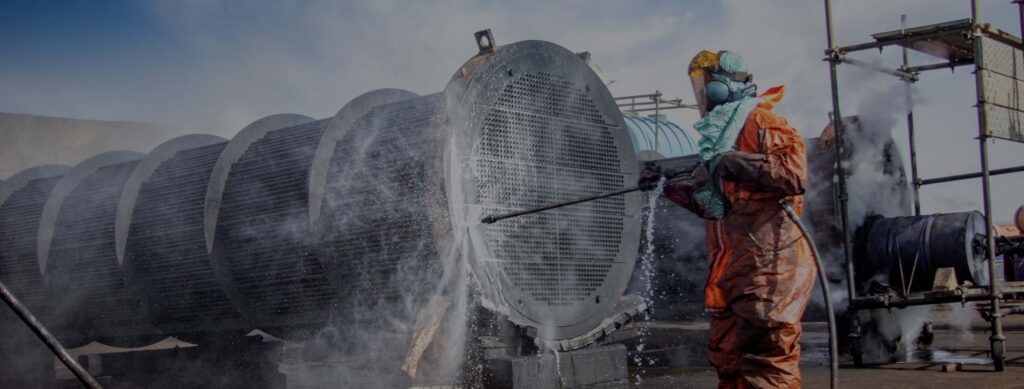
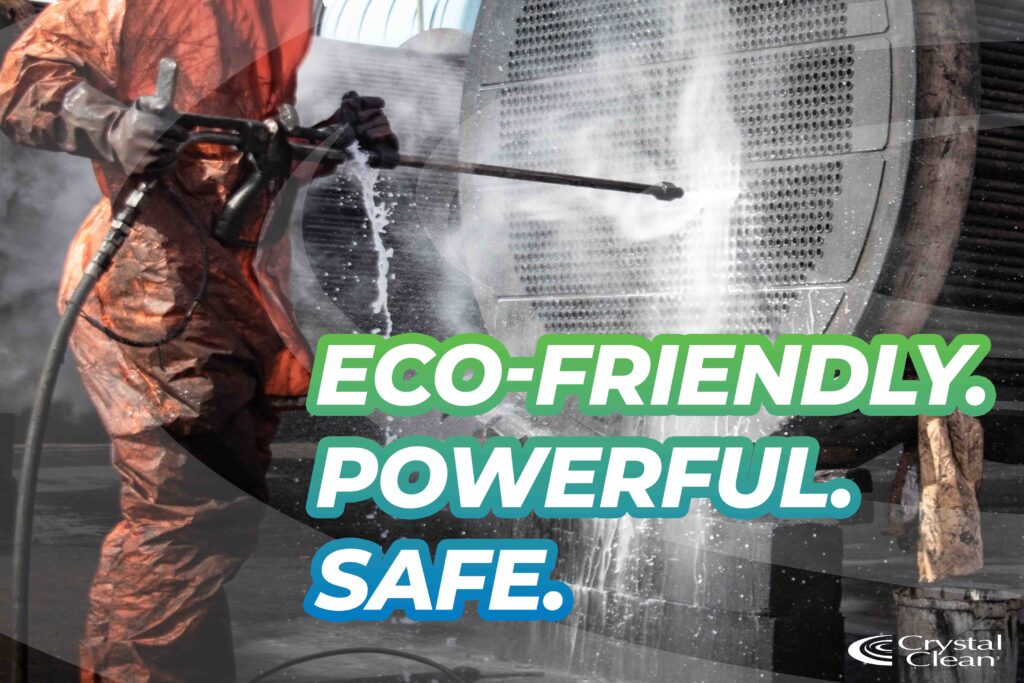
At its core, hydroblasting uses nothing more than high-pressure water to remove unwanted buildup. By adjusting pressure and specialized nozzles, trained operators can strip away paint, rust, concrete, or stubborn debris without damaging the underlying surface. Because it relies solely on water, hydroblasting avoids the need for harsh chemicals and reduces the risks associated with abrasive cleaning methods.
A typical process begins with assessing the surface and selecting the right pressure and equipment. Protective barriers may be set up to control runoff, followed by precise water jetting to clean or remove material. Once complete, the area is inspected to ensure everything has been cleared. Finally, any removed materials are responsibly collected and disposed of, keeping operations clean and compliant.
The Equipment Behind the Process
Hydroblasting is powered by pumps capable of producing pressures up to 20,000 PSI. Depending on the project, equipment can range from handheld units to truck-mounted systems for large-scale work. Operators often use hydroblast guns connected to reinforced hoses, allowing them to adjust water pressure and direction with precision. For more complex or confined spaces, automated systems and robotic tools can take over — providing accuracy, consistency, and an added layer of safety by reducing the need for direct worker involvement.
Where Hydroblasting Makes a Difference
Few cleaning methods are as versatile as hydroblasting. Manufacturing facilities use it to clear residue from tanks, piping, and machinery. Construction and infrastructure projects rely on it for surface preparation, ensuring coatings adhere properly and repairs last longer. In some cases, hydroblasting is even used for controlled concrete removal, offering a quieter, dust-free alternative to jackhammers and other mechanical methods.
Because it can reach into small slots, ducts, and tubing, hydroblasting also excels at maintaining critical systems like heat exchangers and condensers. Routine services help prevent buildup that could otherwise reduce efficiency, cause downtime, or shorten equipment life.
Benefits Beyond Clean Surfaces
The advantages of hydroblasting go far beyond spotless equipment. It reduces the need for chemical cleaners, making it better for the environment and safer for employees. By capturing debris and controlling runoff, it also minimizes airborne particles that can harm air quality. And because it’s both fast and precise, hydroblasting helps reduce downtime, allowing operations to return to full capacity more quickly.
Partnering with Crystal Clean
At Crystal Clean, we view hydroblasting not just as a service, but as a way to help our customers protect their people, their assets, and their reputation. Our team combines advanced equipment with deep expertise to deliver results you can count on — whether it’s routine maintenance, surface preparation, or specialized cleaning challenges.
When you choose Crystal Clean, you’re choosing a partner committed to safety, compliance, and environmental responsibility. If you’re curious about how hydroblasting can benefit your facility, our team is here to share insights and create a solution tailored to your needs.
Let’s start the conversation — together, we’ll keep your operations clean, compliant, and running at their best.
Managing hazardous waste today requires more than a decade-old checklist. It demands a system built upon safety, sustainability, and reliable partners to give you confidence you’re prepared for your next audit.
Industrial waste management has become more complex, not less. Regulations are evolving and expectations are higher from stakeholders to improve corporate sustainability.
The companies succeeding today treat hazardous waste management as a core part of their operations, and a vital part of what they do to protect their business, their customers, and the environment they live and work in. Companies with proven waste programs don’t scramble when it’s time for the next compliance audit. They rely on trusted systems and proven partners to ensure compliance from cradle-to-grave.
This guide outlines what proper hazardous waste disposal looks like based on real-world operations. Whether you manage a single location or a nationwide footprint, this approach can help reduce risks, improve safety, and support your environmental objectives.
Understanding Hazardous Waste
Hazardous waste isn’t mysterious. The EPA has clearly defined specific characteristics that determine if a waste is hazardous and how it must be handled. The EPA classifies waste as hazardous if it exhibits ignitability, corrosivity, reactivity, or toxicity.
In manufacturing facilities, hazardous waste shows up as spent solvents from parts cleaning, used oils from equipment maintenance, and chemical byproducts from production processes. Automotive operations generate used antifreeze, used oil, or spent solvents. Each industry creates distinct waste profiles, but the management principles remain consistent.
The EPA’s listed hazardous wastes catalogs hundreds of listed hazardous wastes. Some are hazardous because of the type of operation that creates them (F-list and K-list wastes), some are pure chemical formulations considered hazardous (P-list and U-list wastes) and others become hazardous when they exhibit certain properties (characteristic wastes). Understanding which category your waste falls into determines your regulatory obligations under RCRA. Most facilities generate multiple waste streams, and each stream requires separate handling protocols, distinct storage requirements, and specific disposal methods.
The complexity multiplies when you operate across state lines. While federal RCRA standards provide the baseline, stricter regulations may have been implemented at the state level, such as in California or Connecticut. A waste stream that’s non-hazardous federally might be regulated as hazardous in your state. Operations with multiple facilities can’t assume one approach works everywhere.
The Risks of Improper Hazardous Waste Disposal
Following proper disposal protocols isn’t just regulatory. It’s how you keep your workforce, your community, and your business safe. Improper handling of waste can lead to long-term environmental damage that may take decades to remediate.
The risk of pollution and harm to people and the environment is why CERCLA exists. Agencies regularly inspect facilities, review manifests, and assess disposal practices to reduce risk, protect workers, and keep the environment clean from pollution. Regulatory violations often result in formal notices, corrective actions, and potential legal or financial penalties.
The consequences can be significant, not just for a business, but also for workers, community members, and the local environment. Environmental responsibility is more vital than ever, and having a reliable partner on your side to help you navigate hazardous waste disposal with confidence.
Steps to Properly Dispose of Hazardous Waste
1. IDENTIFY AND CLASSIFY WASTE
Accurate waste characterization starts with understanding how each waste stream is generated. Use your knowledge of equipment, chemicals, and processes to determine if your waste is listed by the EPA or exhibits hazardous characteristics. This forms the basis for the initial classification, matching materials against the EPA’s listed wastes and testing characteristic waste streams regularly or whenever any process changes.
Documentation is key in this step. Inspectors expect to see what information supports your classifications. They want to see SDSs, references to specific EPA listings, and test results showing specific characterizations.
2. LABEL AND STORE SAFELY
Storage and labeling requirements exist to prevent safety incidents. For example, containers must be appropriate for the waste type. Certain solvents can degrade plastic and some acids may corrode metal. Using the proper container reduces spill risks and keeps the workplace safe.
Labeling is also a vital step to ensure incompatible wastes are not mixed by accident. Acids and bases can’t share space, and oxidizers need separation from organics. At a minimum, containers should clearly be labeled as hazardous waste with the contents in the container and the accumulation start date.
Accumulation time limits are also important to follow. Large quantity generators have a 90-day storage period, and small quantity generators have a 180-day storage period. Secondary containment options, such as spill pallets or berms, also reduce the risk of spills and it is important to plan for leaks before they happen.
3. CHOOSE A TRUSTED SERVICE PROVIDER
When looking for a service provider, it’s important to find a partner that is reliable, has the proper licenses and documentation processes, and is prepared to support you for compliant cradle-to-grave management of hazardous wastes.
Treatment and disposal methods matter, and a knowledgeable partner can help guide you through waste minimization opportunities and identify alternative disposal methods that improve your environmental operations or reduce your generator status. If you’re operating multiple facilities across different regions, having a partner with a nationwide network offers consistent, reliable service from a single source.
4. TRANSPORT AND DISPOSE RESPONSIBLY
Proper transportation and manifest documentation exist to create a reliable paper trail from waste generation to final disposal. Every party signs, every detail is recorded, and you have written proof of compliant disposal.
Manifests aren’t optional paperwork. They’re required documentation that verifies the process was followed compliantly. Whether using paper or electronic manifests, accuracy and retention are key. Auditors will verify waste codes, signatures, and facility permits.
Final disposal methods vary by waste stream. Incineration, landfilling, and other disposal methods all require facilities with appropriate permits and emissions controls. Modern facilities can neutralize acids, recover base oils from spent lubricants, and destroy PFAS compounds that persist through conventional treatment. When you select partners with sophisticated capabilities, you’re contributing to genuine environmental protection rather than simply avoiding violations.
The Role of Sustainable Waste Management
Industrial waste management is transitioning from disposal-focused to resource recovery approaches. This shift is driven by both environmental and economic benefits that support a circular economy, where waste is reduced, reused, or recycled whenever possible.
Resource recovery turns waste into value. Used oil, for example, can be re-refined into high-quality base oils while reducing greenhouse gas emissions by up to 77% compared to virgin production. Solvents can be distilled for reuse. Antifreeze can be reconstituted. Even some hazardous waste streams can be processed into alternative fuels.
Recovery reduces reliance on landfilling and incineration, which can become a concern due to capacity constraints. Stakeholders are taking notes and businesses that report on ESG performance and GHG emissions can see tangible impacts when implementing waste recovery programs.
Common Environmental Compliance Mistakes to Avoid
Even experienced operations may have gaps in environmental compliance, not due to intent, but rather from overlooked systems and assumptions.
Manifest errors easily top the list as a common violation. Missing signatures or unreturned forms can disrupt your chain of custody and raise flags during inspections. The solution can be simple, using a tracking system and training staff on proper manifest handling to reduce errors. A reliable partner that supports this process can also go a long way in making this process easier.
Mixing waste streams is another mistake that can happen. When non-hazardous waste is mixed with hazardous waste, the entire waste volume must be considered hazardous. Separating waste streams at the point of generation reduces errors and provides more accurate waste classification.
Storage violations are another error that happens when waste accumulation exceeds planned capacity. Storage areas become crowded and containers exceed time limits, especially during high-production periods. If you manage your waste storage process like inventory management, this issue can be easily addressed. Monitor volumes, schedule pickups based on actual generation, and maintain a buffer space for unplanned waste generation.
Unlicensed vendors can be another compliance risk, and a simple practice to have in place is to audit and verify that each vendor you work with has the necessary credentials for managing hazardous waste. Request EPA IDs, DOT licenses, and state permits from any waste service provider before commencing work.
Inadequate employee training may be one more area that leads to issues down the line, such as improper labeling or incorrect waste handling. Having regular training, as required by RCRA, helps employees stay current with all regulations and processes they need to follow. Regular refresher training keeps safety and compliance top of mind for both new and veteran employees.
How Crystal Clean Simplifies Hazardous Waste Removal
Managing hazardous waste comes with a higher expectation of compliance. That’s why having an experienced partner is essential to maintain compliance and minimize risk with a hazardous waste program. At Crystal Clean, we help reduce the burden of proper hazardous waste management by providing comprehensive, compliant, and consolidated service across all your environmental services.
Having a single partner for all waste streams means having a single point of contact, which simplifies scheduling, billing, and service coordination. A nationwide network like Crystal Clean’s means you’ll experience consistent service and compliance across all your facilities. Crystal Clean also monitors regulatory changes at the state and federal levels, keeping your operations ahead of evolving requirements.
Because we operate our own permitted treatment, recovery, and recycling facilities, we provide more options than transportation-only vendors. This means greater flexibility, lower risk, and more sustainable outcomes. Since Crystal Clean has the capabilities to manage waste from pickup to disposal, our team can help centralize waste stream data to make audits and sustainability reporting faster, easier, and more accurate.
And finally, part of hazardous waste management involves having a plan in place for emergency responses in the event of spills. When the unexpected happens, our 24/7 spill response teams are ready. With trained personnel and the right equipment, we provide peace of mind and fast containment when you need it most.
Protect Your Business and the Environment
Proper hazardous waste disposal isn’t just part of a compliance checklist. It’s part of your core operations and a strategic function that reduces risk and protects both the environment and your business. When you handle waste responsibly, you’re simultaneously reducing environmental impact and eliminating the regulatory and financial risks associated with cutting corners.
Your waste management program deserves the same strategic attention you give to other operational functions. The right approach, implemented consistently across your organization, becomes a strategic asset rather than a compliance obligation.
Partner with Crystal Clean today for safe, compliant, and sustainable waste management solutions tailored to your business needs. Contact our team to discuss how we can support your facility’s environmental management objectives.
What began as a small operation has evolved into a nationwide leader in environmental and industrial services. Crystal Clean’s growth has been driven by innovation, reliability, and a commitment to sustainability. Through continuous expansion and advanced technologies, we have built a strong foundation that supports our three core pillars: Environmental Services, Industrial Services, and Waste Treatment Solutions. Together, these capabilities position Crystal Clean as a trusted partner dedicated to helping businesses operate cleaner, safer, and more responsibly across North America.
Environmental Services
Crystal Clean’s story began with a simple but powerful vision: to protect the earth’s resources by helping the business world run cleaner. Over time, that mission evolved into a wide-reaching network of environmental support designed to keep facilities running safely and efficiently.
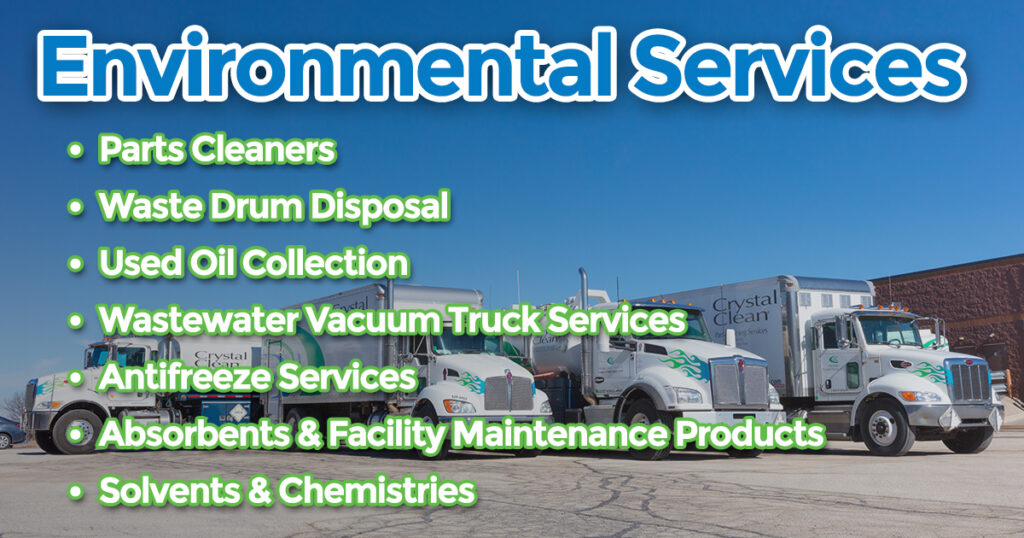
Our Environmental Services division has grown into a cornerstone of nationwide operations serving automotive, manufacturing, and industrial partners with expertise that blends convenience, safety, and sustainability. Crystal Clean supports every aspect of facility maintenance with expert parts cleaning, used oil, wastewater vacuum, and waste disposal services that ensure cleaner, more sustainable operations.
By focusing on service dependability and environmental responsibility, we’ve built long-standing partnerships that reflect our core values: safety, honesty, accountability, respect, relationships, inclusivity, and excellence.
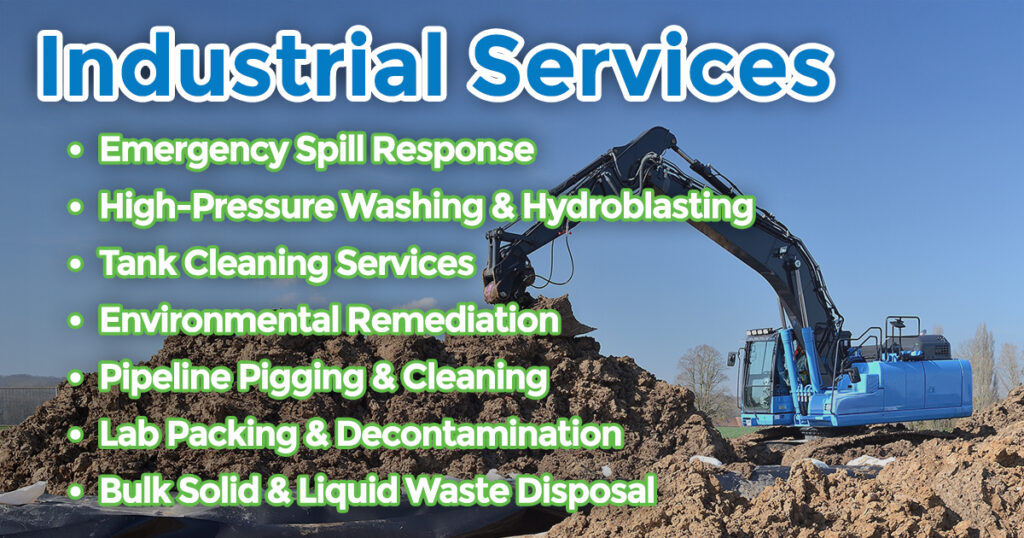
As customer needs grew more complex, Crystal Clean expanded beyond routine environmental management into large-scale, on-site Industrial Services operations. These services are carried out through our Patriot Environmental Services brand.
As part of the Crystal Clean family, Patriot delivers the power of experience and rapid response for industrial and field service needs. Our team of knowledgeable and experienced professionals leads the industry in responsiveness, whether providing routine maintenance or mobilizing during a national disaster, and has earned a highly respected reputation for reliability and results. This commitment to excellence ensures that every project is completed safely, efficiently, and with the highest level of professionalism.
Through Patriot, we’ve built lasting partnerships with organizations that depend on reliability and rapid response. Serving a wide range of industries, our continued growth reflects Crystal Clean’s commitment to innovation, adaptability, and the expertise to meet every environmental challenge with confidence.
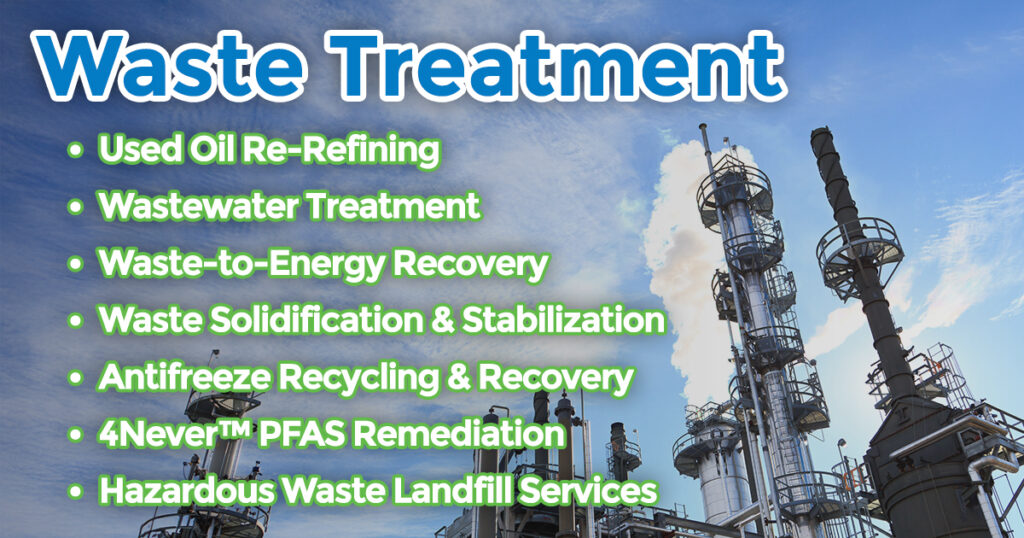
At the heart of Crystal Clean’s growth is a deep commitment to sustainability and a circular approach to resource management. Our Waste Treatment division provides sustainable methods for managing and disposing of waste, finding opportunities to recover or repurpose materials whenever possible to reduce environmental impact.
Through advanced technologies and state-of-the-art facilities, Crystal Clean reclaims used oil, treats wastewater, recycles antifreeze, and manages complex waste streams responsibly. Our processes support a circular approach to resource use by recovering usable products, promoting efficiency, and helping customers meet their environmental goals.
Every gallon re-refined, every liter treated, and every waste stream managed is part of our ongoing vision to protect the earth’s resources by helping the business world run cleaner.
Built to Grow. Designed to Last. Committed to Our Customers.
What began as a small operation has grown into a nationwide network built on service excellence, with Crystal Clean constantly evolving to meet the needs of both businesses and the environment.
Crystal Clean’s three pillars of Environmental Services, Industrial Services, and Waste Treatment Solutions function as one unified system. This cohesive approach enables us to deliver comprehensive environmental management, protect valuable resources, and drive sustainable growth for every customer we serve.
As we look ahead, one thing remains unchanged: Crystal Clean’s dedication to providing smarter, safer, and more sustainable solutions that keep North America’s industries moving forward.
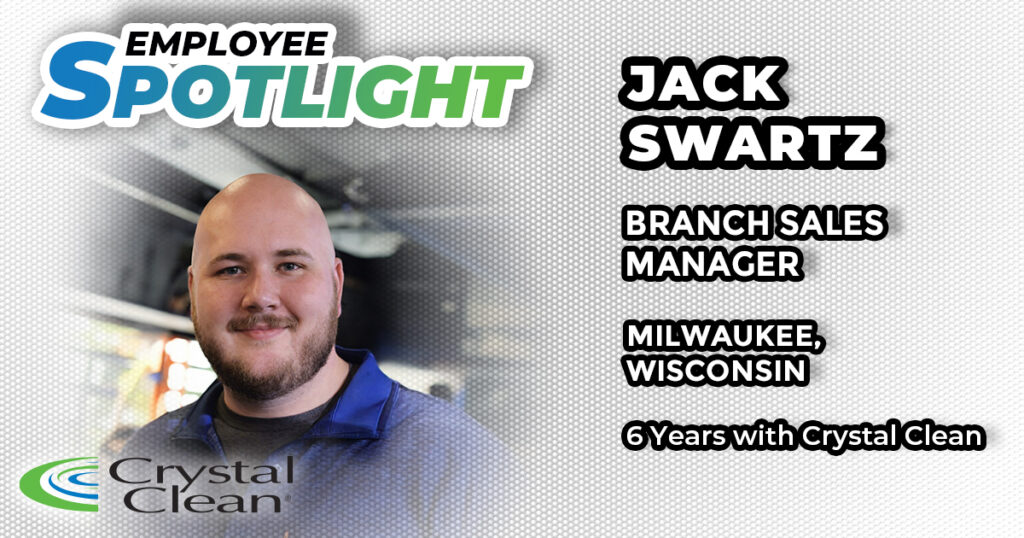
Some career paths follow a straight line. Others take shape through ambition, adaptability, and a drive to succeed. For Jack Swartz, Branch Sales Manager in Milwaukee, the journey from Service Sales Representative (SSR) to BSM is a testament to what’s possible when you stay focused, stay hungry, and never settle for “no.”
Jack joined Crystal Clean in 2020 as an SSR at the Green Bay branch. By November 2024, he stepped into the BSM role in Milwaukee, ready to take on bigger responsibilities and lead from the front. With a growing team and customer base, his days are now faster paced and more demanding, but that’s exactly what motivates him.
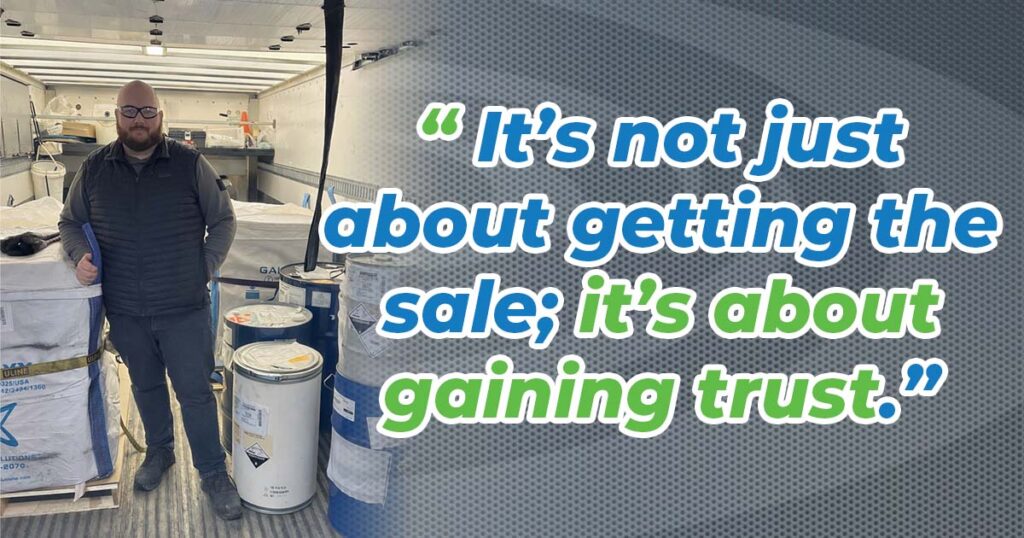
“You’ve got to stay organized and on your toes. Things come at you fast, and customers count on you to solve problems quickly,” Jack said. “It’s not just about getting the sale; it’s about gaining their trust.”
Jack’s ability to read people, build relationships, and offer honest solutions has been key to his success. He’s a natural communicator who believes in being the kind of person others want to do business with. “Own your mistakes. Be honest. That’s how you build real trust with your customers,” he explained.
One of Jack’s most memorable wins came in March 2025, when he landed a major waste account with a large company in Wisconsin. What started with a parts washer service evolved into signing over 22 profiles for their waste disposal needs, a career defining moment that proved his strategy was working.
According to Regional Manager, Jeff Roche, “Jack is one of those mail room to the boardroom type individuals… Jack’s organized, structured and loves the preparation part of sales as much as the win.”
Divisional Vice President of Sales, Ed Guglielmi adds, “He’s self-motivated, intelligent, and aggressive in his prospecting. His commitment to research and asking the right questions has helped position him as one of the top sales performers in Division 1.”
What drives Jack? A mix of competitive spirit, problem solving, and a desire to support both his team and his family. Outside of work, he’s a proud Packers fan and supports his wife, who is studying diagnostic medical sonography full time.
Looking ahead, Jack hopes to see Crystal Clean invest in more TSDF facilities to create greater independence and pricing control. He sees every challenge as a chance to grow, personally and professionally, and continues to prove that persistence and preparation are a winning combination.
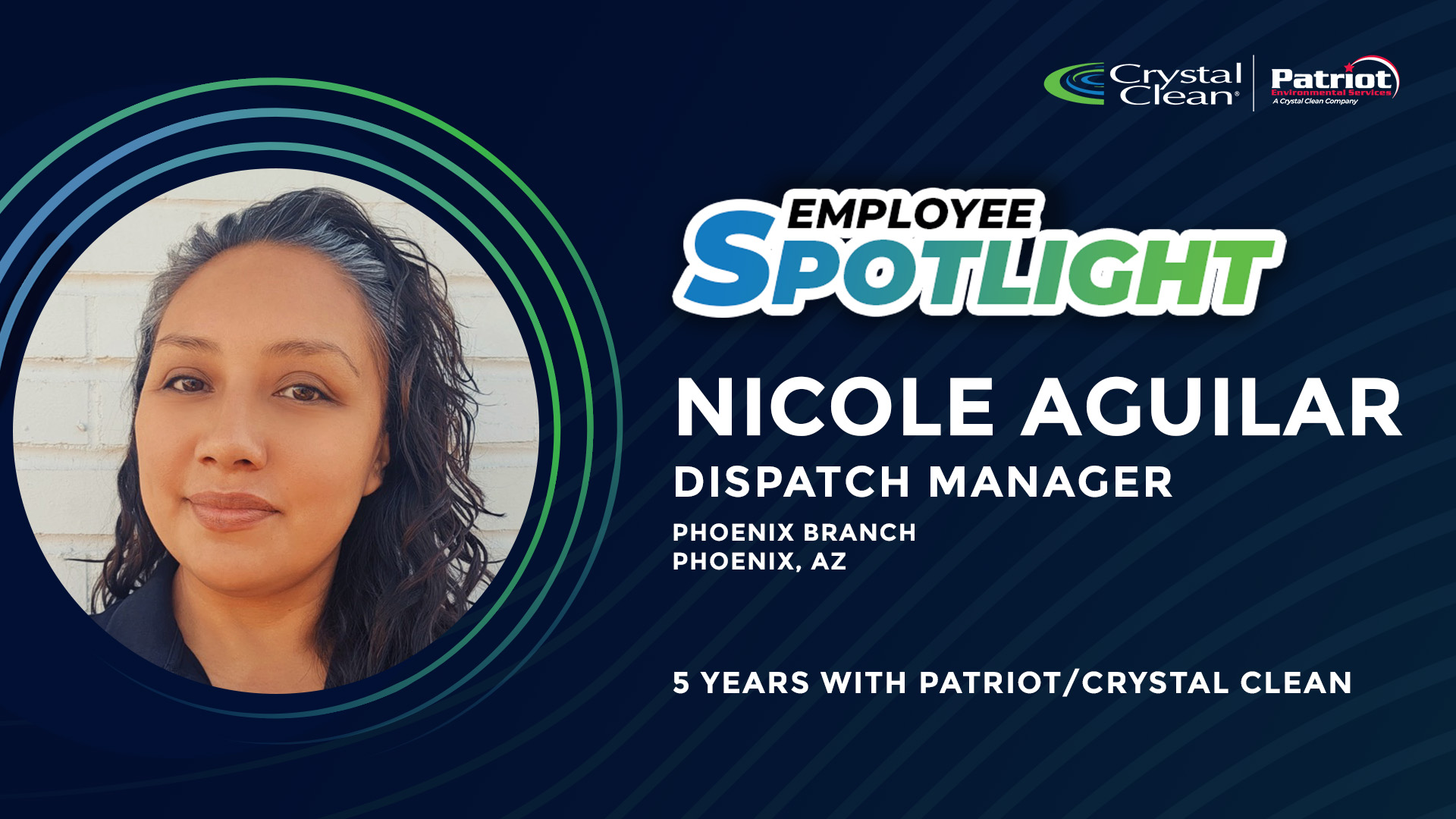
At Patriot’s Phoenix branch, Nicole Aguilar plays a vital role in keeping operations running smoothly. As Dispatch Manager, Nicole coordinates schedules, manages inventory, and ensures that every job is properly staffed and prepared. With nearly six years in the environmental services industry and five years with Patriot, she has worked her way up through multiple roles and understands first-hand what it takes to support a team in the field.
Nicole started her career with Patriot as a field technician, giving her firsthand experience of the demanding work our field teams handle every day. From there, she moved into the roles of Lead Technician, Foreman, and Emergency Response Supervisor, before stepping into her current role as Dispatch Manager. Having worked her way up in so many different positions, Nicole has a deep appreciation for the work each team member does and what it takes to support them.
A typical day for Nicole starts early with coffee and a focus on preparation. She makes sure crews have everything they need before heading out the door. That includes confirming they have the right supplies, enough personnel for the job, and all the required information to complete their work safely and efficiently. She also keeps a close eye on inventory, making sure chemicals, PPE, and other equipment are fully stocked and compliant. Regular walkthroughs of the warehouse help ensure everything is organized and ready for the next job.
Nicole believes her success comes from taking initiative and treating people fairly. As the oldest sibling in her family, she says she naturally stepped into leadership early in life. That mindset carries into her work today. She focuses on making sure responsibilities are shared evenly and that everyone on the team feels supported.
For Nicole, the team at the Phoenix branch is one of the best parts of the job. She describes the group as hardworking and always willing to help each other out, no matter the situation. That sense of teamwork is critical in an industry where every job can bring new challenges.
One memorable experience during her time with Patriot was attending On-site training in Bakersfield, where she was trained in how to use new equipment. The training was not only valuable from a technical standpoint but also gave her the opportunity to connect with colleagues from other branches and see how truly big of a team she is a part of.
Nicole credits Patriot with supporting her career growth by giving her opportunities to move into new roles and learn different aspects of the business. That trust and encouragement helped her continue developing professionally while staying close to the work she enjoys.
When offering advice to new employees, Nicole is honest about the realities of the job. There will be difficult days, she says, but the good days make the hard ones worthwhile. Maintaining a healthy work life balance and taking advantage of the quieter moments to reset can be just as valuable as working hard when the job demands it.
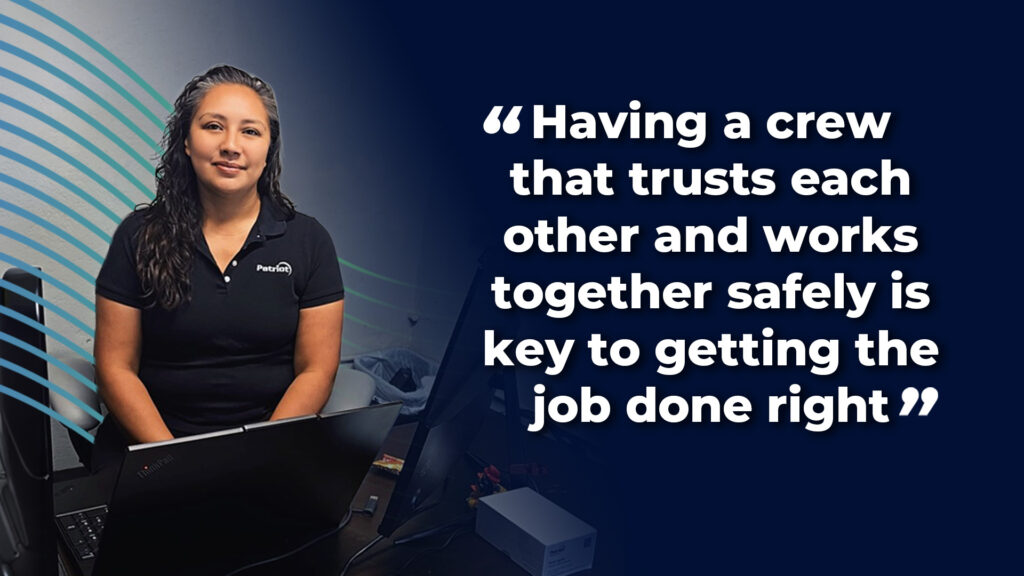
Safety is also a top priority for Nicole. The work our field reps perform can be dangerous, and she believes it is essential that every team member looks out for one another. Having a crew that trusts each other and works together safely is key to getting the job done right.
Nicole’s dedication has not gone unnoticed. Area Manager Tobi Moore shared her appreciation for the impact she continues to have at the Phoenix branch:
“I want to take a moment to express my sincere appreciation for Nicole’s exceptional work and dedication. Her contributions have not only met but exceeded expectations, and her professionalism has made a noticeable impact on our team’s success. Nicole’s ability to maintain a positive attitude during challenging situations and deliver consistently high-quality results sets a strong example for others. It’s clear that she approaches her work with both passion and precision, and that commitment inspires those around her. Nicole has played a key role strengthening client relationships and improving team efficiency, and her contributions are deeply valued. Thank you to Nicole for your hard work, dedication, and the positive energy you bring to our workplace.”
Outside of work, Nicole enjoys gardening and visiting local nurseries to add new plants to her collection, especially cacti and flowers. She also enjoys spending time with her family. Nicole and her husband, who owns an automotive shop, often work on cars together. They have two children, a 19-year-old son and a 16-year-old daughter and enjoy attending conventions and spending time together whenever they can.
Looking ahead, Nicole hopes to see Patriot continue expanding into areas such as biohazard decontaminations, helping the company grow while providing important services to communities.
Nicole’s dedication, hands on experience, and commitment to supporting her team make her an important part of the Patriot Phoenix operation. Through organization, initiative, and a strong focus on teamwork, she helps ensure that every job starts with the preparation needed to succeed.
2000 Center Drive Suite East C300
Hoffman Estates, IL 60192
Toll Free 1-877-938-7948 Fax 1-847-836-5677
New Online Payment Portal
Crystal Clean has moved to a new online payment portal called Versapay. The new platform gives you benefits such as:
One-click access to invoices and supporting documents
Email notifications to alert you when a new invoice is available
Online communication with us if you have any invoice questions
24/7 access to your account anytime, anywhere
Please click the button below to access the portal and set up your account. You will need to create a new account even if you have used our previous online payment system.