
Heat Transfer Fluids
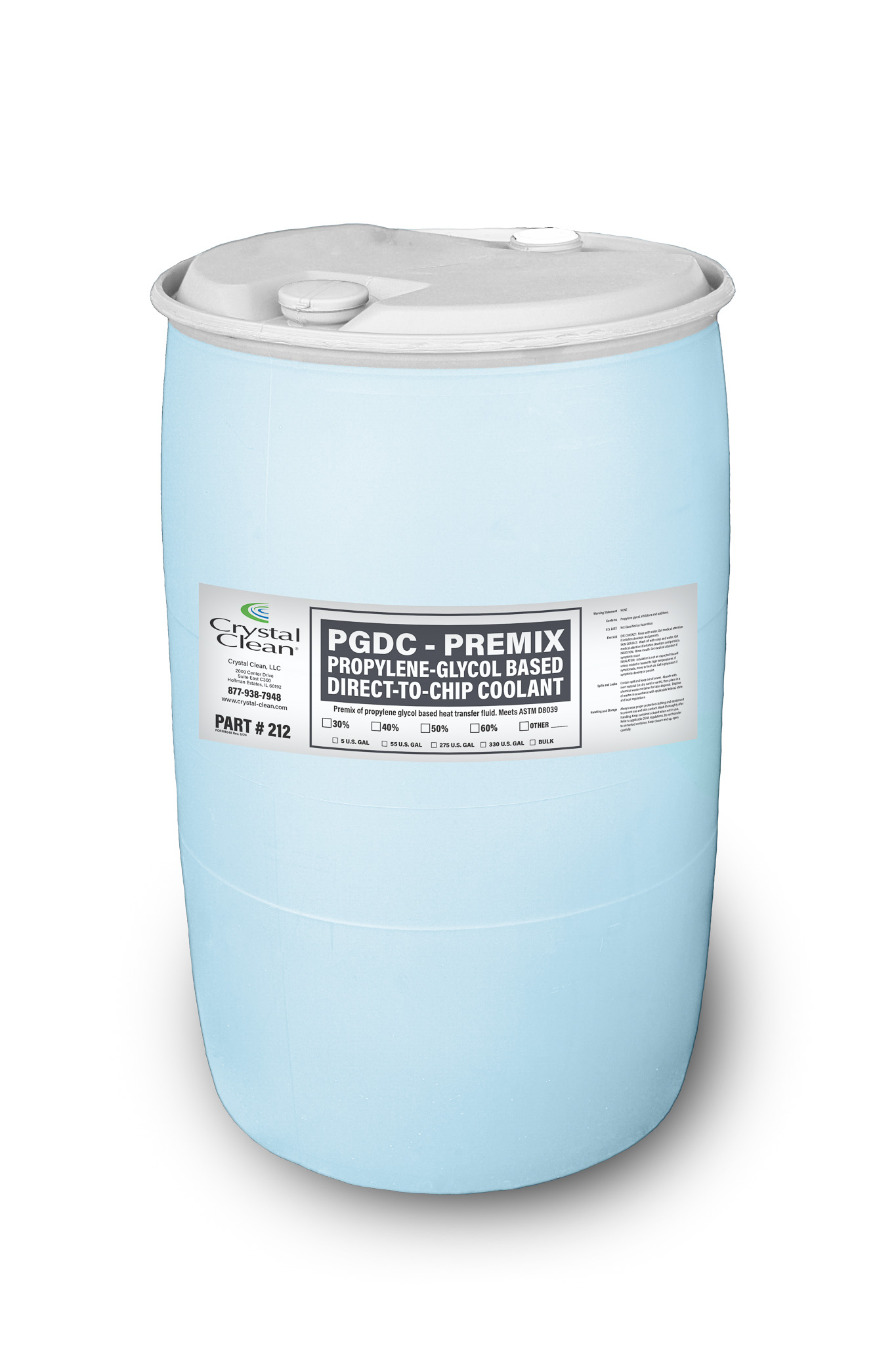
Propylene Glycol-Based Direct-To-Chip Coolant PGDC
Pre-Mixed and Concentrate Available
PGDC is designed for specific heat transfer applications, including data centers utilizing direct-to-chip
cooling systems, and aluminum closed loops system requiring a lower pH coolant. The inhibitor
chemistry uses organic acid technology (OAT) without objectionable components like phosphate and
heavy metals. It is an environmentally friendly alternative to traditional Ethylene-glycol based heat
transfer fluids. The product offers protection of aluminum, brass, copper, stainless and carbon steel.
Features:
- pH of 8.67 at 68°F (20°C) to support stable system performance.
- Chloride content limited to 25 ppm maximum to help minimize corrosion risk.
- Specific gravity of 1.026 at 68°F (20°C) for reliable system consistency.
- Freeze protection down to 14°F (-10°C) for dependable operation in lower temperatures.
- Specific heat capacity of 3.96 kJ/kg°C for efficient heat transfer.
- Electrical conductivity of 3260 μS/cm at 68°F (20°C) for consistent fluid performance.
Applications:
- Direct-to-chip cooling systems in data centers
- Liquid-cooled data center infrastructure
- Aluminum closed-loop cooling systems
- High-performance computing (HPC) environments
- Telecommunications equipment cooling
- Industrial process cooling systems
- Heat exchangers and cooling loops
- OEM cooling systems requiring OAT-based fluids
- Systems with mixed-metal components
Operating Temperature Range and Freeze/Burst Protection
Crystal Clean’s PGDC is long-lasting and has great temperature stability, covering a wide range from
14°F (-10°C) to 195°F (90°C). Through laboratory testing, and if required, a concentrated booster is
available for restoring the inhibitor content to keep the coolant in proper balance.
Reliable Protection
As an all-organic formulation, PGDC does not contain any conventional inorganic salts (free of nitrite,
nitrate, silicate, phosphate and borate), amines or 2-ethylhexanoic acid. The technology minimizes
deposit formation, protects a wide variety of metals, and has high compatibility with non-metal
components (hoses, seals, and gaskets). The coolant’s performance is further enhanced with antiscalant
and anti-fouling additives.